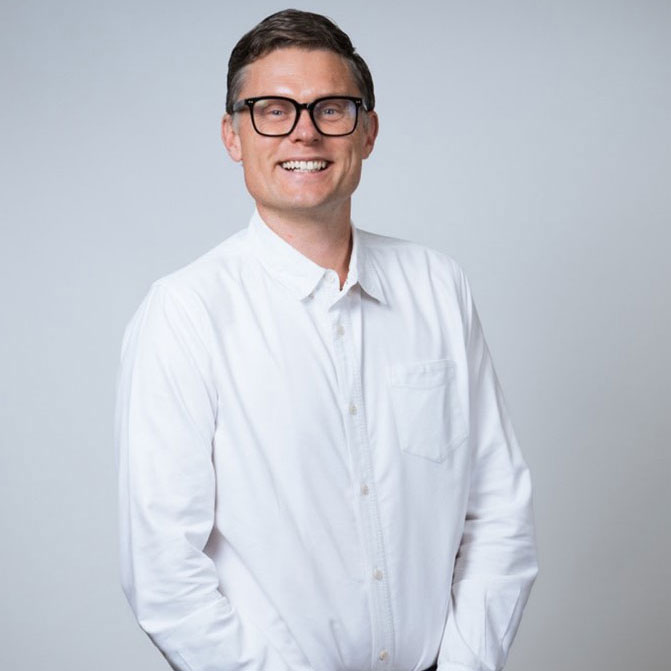
The Otago Medical Research Fund has supported Andrew’s work through two Laurenson Awards, first in 2019 and now 2026.
“I work with achievable lifestyle and environment change in the prevention and management of non-communicable diseases, mainly T2 diabetes, heart disease, and some cancers” Andrew summarised in a recent sit down with OMRF. “I’m either trying to improve the accuracy of nutrition advice, change the food environment around us, or doing the evidence base behind guidelines for the public or health professionals”
Describing himself as an epidemiologist who prefers working with randomised controlled trials, Andrew first came to do a PhD with the University of Otago 13 years ago, and never left.
“I’m really interested in a wide range of applied research study designs, I like trials but also meta-analyses, qualitative studies, and working with cohort data or large nationally representative samples.. Recently I’ve also gotten into metabolomics looking at biomarkers of food intake, that’s really been stretching me!”
A common theme across his work is improving nutrition advice and guidance, linking it closer to what the research supports.
Nutrition advice
Most of the nutrition messages we see every day are not about improving health, they are there for someone to make money from others consuming their content. It doesn’t have to be as obvious as buying a diet or self-help book, people make money from advertising when sharing controversial opinions online–with the more followers or people engaging with their content, the more likely people are to see their content.
“Nutrition science has been littered with incorrect or oversimplified messages since it was founded” Andrew states. “I work on topics where there is uncertainty in the science, to then figure out what the evidence-based messages are that will help inform the right choices around what to eat”
Changing food environment
While nutrition advice often targets the individual, Andrew’s work also targets the food environment to make healthier choices the easiest choices. This includes supporting food reformulation, or changing marketing or labelling.
“Both my Laurenson awards have supported research in this area actually, both looking at different aspects of bread. I’ve been really proud of these Laurenson award projects actually, because the Laurensons were initially bakers and beadmakers–that’s how they made the money to then bequest to OMRF”.
The 2019 Laurenson was for a randomised controlled trial of wholegrain processing and found that less-processed whole grains are better for T2diabetes management that more-processed and finally milled whole grains. This was a highly successful project that supported a visiting Master student from Sweden who then went on to complete a PhD in this area. The 2026 Laurenson is for a randomised controlled trial of a high-fibre high-protein bread in diabetes management, this time supporting a current PhD student from Bangladesh completing his project this year.
“Both of these projects are about food reformulation, trying to improve the quality of foods in the food supply around us”
Evidence base behind guidelines for the public or health professionals
Finally, as a top-down approach, Andrew works in pulling together the evidence base behind nutrition guidelines for the public or health professionals. This work is done with organisations such as the Heart Foundation to support their position statements, or the World Health Organization to support their recommendations.
“I really enjoy this type of work, it’s more statistical in nature, identifying all the existing trials testing one thing and then combining their results to understand the overall picture”.
It is this type of research that helps to improve nutrition communication and advice, linking it to what the evidence indicates is best for health
“I’m really fortunate to be able to do my research with support from organisations like the OMRF, and I have a great team around me I get to work with every day”.
(Profile written 2026)